blendend
View Sourceblendend brings Blend2D's fast, high-quality 2D vector renderer to Elixir.
It gives you crisp antialiased shapes, gradients, text, and blending through an Elixir API that calls Blend2D directly via NIFs.
The project is still evolving.
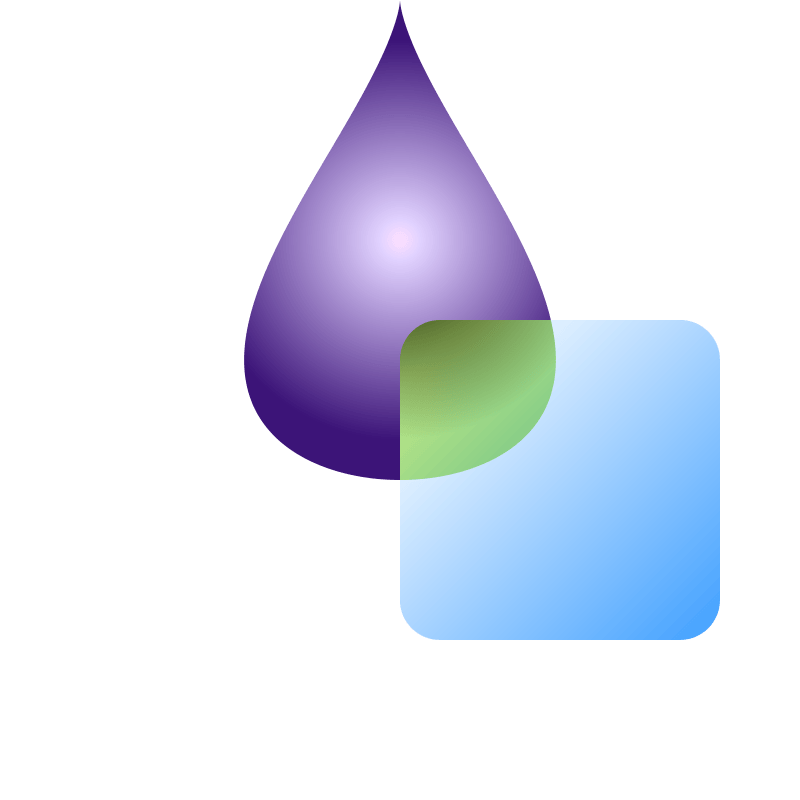
Features
- Canvas API: fill/stroke shapes, work with paths, transforms, and compositing.
- Text handling and layout: load fonts, measure text, and draw crisp glyphs.
- Gradients, patterns, blur effects, and masks.
- Expressive drawing DSL and macros for comfortable sketching.
- Headless rendering for charts/reports (matplotlib AGG–style) and generative art (p5.js–style).
- Built for speed via Blend2D.
Requirements
- The latest Blend2D built and installed on your system.
- A C++ toolchain (a C++ compiler + cmake).
Quick build of Blend2D (tested only on Linux):
git clone https://github.com/blend2d/blend2d
cd blend2d
git clone https://github.com/asmjit/asmjit 3rdparty/asmjit
mkdir build && cd build
cmake ..
make -j$(nproc)
sudo make install
Install in your project
def deps do
  [
    {:blendend, "~> 0.3"}
  ]
end
Then:
mix deps.get
mix compile
Quick start
blendend is meant to feel like a sketchbook: open a canvas, put shapes here and there, get pixels back. The Blendend.Draw macros keep things terse so you can focus on shapes and color rather than boilerplate.
Below, we draw a single white line and write it to disk. Change the block to add circles, text, gradients, or any of the other helpers in Blendend.Draw.
use Blendend.Draw

draw 200, 200, "priv/basic_line.png" do
  line 0, 100, 200, 100, stroke: rgb(255, 255, 255)
end
Roadmap
Most of Blend2D's functionality is exposed. Remaining work:
- Multi-threaded drawing pipelines are not supported yet; rendering runs single-threaded for now.
- More documentation and examples (the blendend_playground covers many cases).
Playground
For a richer starting point, clone the blendend_playground repo and run it to browse and tweak the bundled examples in the browser.
Overview
In blendend you describe colors, gradients, shapes, shadows, and transforms directly; the DSL aims to stay declarative and keep style local to each shape.
Colors
hsv(0, 1.0, 1.0)        # gives red
hsv(0, 1.0, 1.0, 0)     # fully transparent
rgb(255, 255, 0)        # yellow
rgb(255, 255, 0, 150)   # shaded yellow
Gradient
grad2 =
  linear_gradient 0, 0, 0, 200 do
    add_stop(0.0, rgb(255, 0, 0))
    add_stop(0.5, rgb(0, 255, 0))
    add_stop(1.0, rgb(0, 0, 255))
  end

box(0, 0, 100, 200, fill: grad2)
Colors change gradually in a box.
Transformation
# Calculate transformation
 m =
  matrix do
    translate(100, 100)
    rotate(:math.pi() / 4)
  end

# Construct a path
path p1 do
  move_to 0.0, 0.0
  line_to 100.0, 100.0
end

# Apply transformation.
with_transform m do
  stroke_path p1, stroke: rgb(0, 0, 0), stroke_width: 5.0
end

# Decorate with shadow.
shadow_path(p1, 10.0, 8.0, 15.0, fill: rgb(250, 0, 0, 150))
Gallery
Vector tracing
|
Blur effect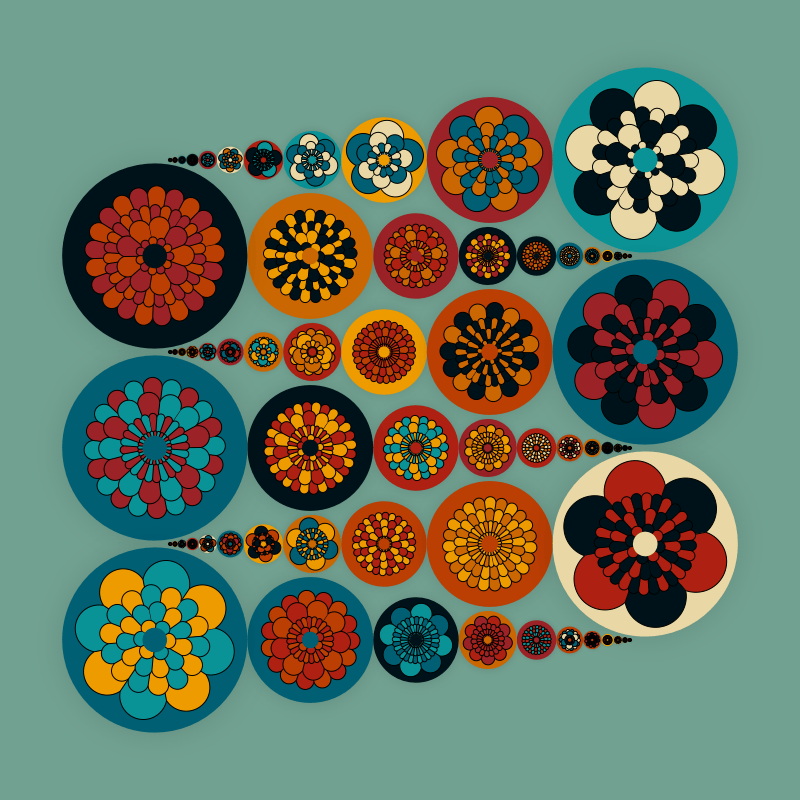
|
Color blending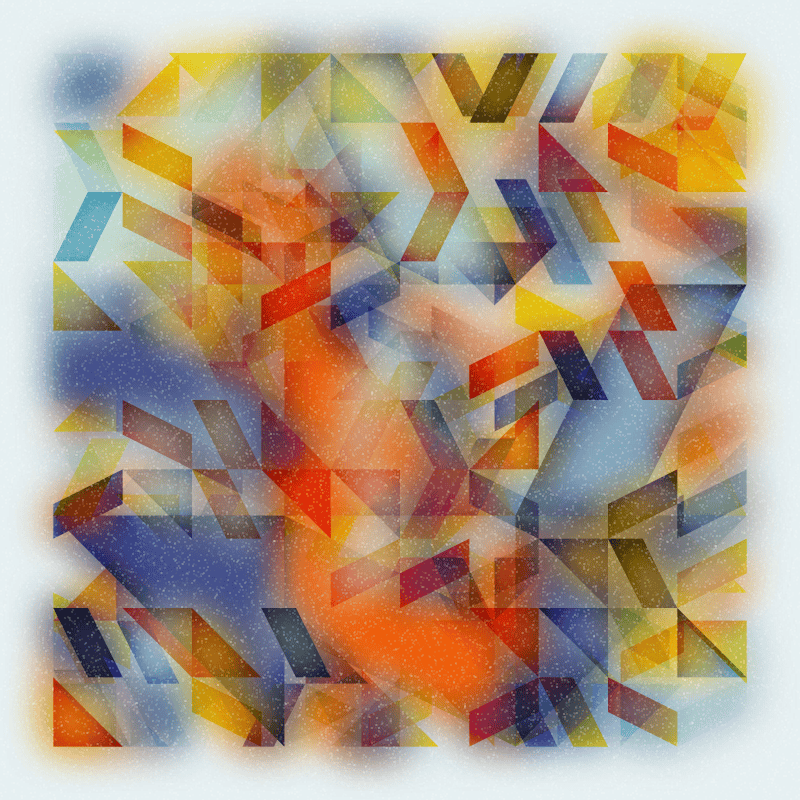
|
Path flattening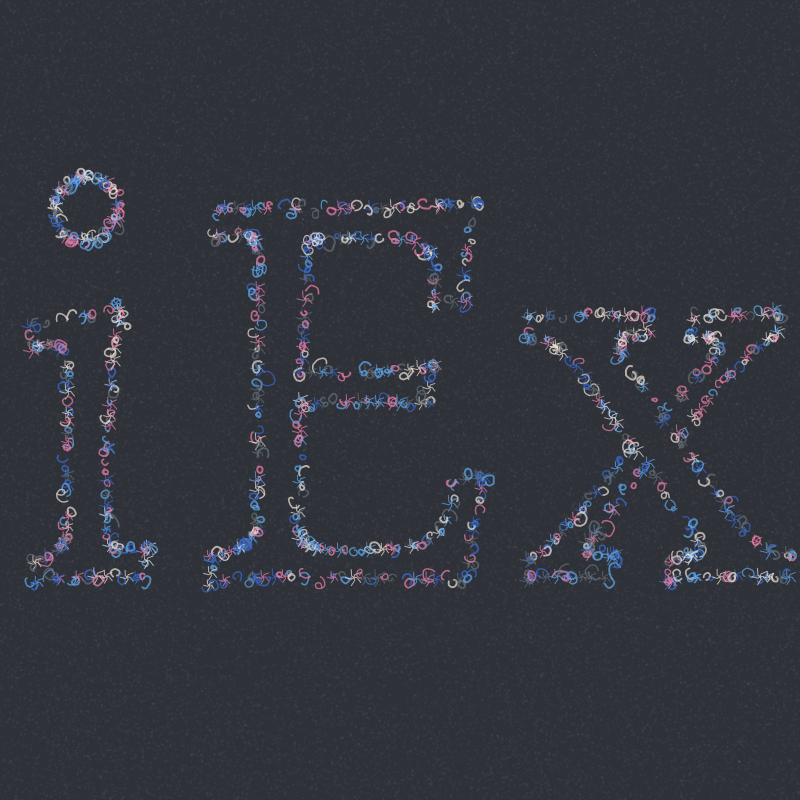
|
Glyph Bounds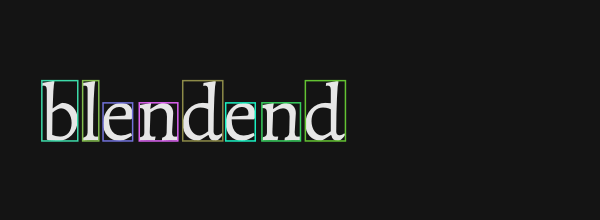
|
Licenses
- This project is released under the MIT License (see
LICENSE). blend2dis licensed under the zlib license.priv/fonts/Alegreya-Regular.otfis distributed under the SIL Open Font License.- The burn grid demo and flower waves (which are available in
blendend_playground) are adapted from takawo's original p5.js sketch (https://openprocessing.org/user/6533) and shared under the Creative Commons BY-NC-SA 3.0 license (https://creativecommons.org/licenses/by-nc-sa/3.0/).