Overview
View Source
IIIF Image Plug
An Elixir plug implementing the International Image Interoperability Framework (IIIF) image API specification.
- The goal of IIIF is to define a standardised REST API for serving high resolution images (art, photographes or archival material published by museums, universities and similar institutions).
- This plug library needs you to define a mapping between image identifier (used in the REST API) and file system path, and will then do the image transformations based on the other request parameters for you.
- There exist several generic Javascript IIIF viewers that utilize this API to allow for optimized viewing (dynamic loading of parts of the image data based on zoom level/viewport).
- WebGIS Javascript libraries like leaflet or OpenLayers support IIIF in one way or the other.
- For the time beeing only (the current) Image API 3.0 is implemented, check out the IIIF documentation for its capabilities.
- The IIIF image API implemented by this library is just one (the foundational) of currently six API standards the IIIF community defines for serving multimedia content and metadata.
- The image processing is handled by libvips via Vix.
Installation
The package can be installed
by adding iiif_image_plug to your list of dependencies in mix.exs:
def deps do
  [
    {:iiif_image_plug, "~> 1.0.0"}
  ]
end
Usage
Assuming you want to serve IIIF in your plug based server at "/iiif/v3", add a forward route like this:
  forward("/iiif/v3",
    to: MyApp.IIIFPlug,
    init_opts: %IIIFImagePlug.V3.Options{}
  )
For Phoenix it would look slightly different:
forward("/iiif/v3", MyApp.IIIFPlug, %IIIFImagePlug.V3.Options{})Example plug
A plug implementation may look something like this:
defmodule MyApp.IIIFPlug do
  use IIIFImagePlug.V3

  # There are two required callbacks you have to implement, plus
  # several optional ones. See the `IIIFImagePlug.V3`
  # documentation for more.

  @impl true
  def info_metadata(identifier) do
    # The first required callback lets you inject some metadata
    # from your application into the plug when it is responding to
    # an information request (info.json) for a specific `identifier`.
    # The only required field is `:path`, which tells the plug the
    # file system path matching the given `identifier`.

    MyApp.ContextModule.get_image_metadata(identifier)
    |> case do
      %{path: path, rights_statement: rights} ->
        {
          :ok,
          %IIIFImagePlug.V3.InfoRequestMetadata{
            path: path,
            rights: rights
          }
        }
      {:error, :not_found} ->
        {
          :error,
          %IIIFImagePlug.V3.RequestError{
            status_code: 404,
            msg: :not_found
          }
        }
    end
  end

  @impl true
  def data_metadata(identifier) do
    # The second required callback lets you inject some metadata
    # from your application into the plug when it is responding to
    # an actual image data request for a specific `identifier`. As
    # with `info_metadata/1`, the only required field is `:path`, which
    # tells the plug the file system path matching the given `identifier`.
    MyApp.ContextModule.get_image_path(identifier)
    |> case do
      {:ok, path} ->
        {
          :ok,
          %IIIFImagePlug.V3.DataRequestMetadata{
            path: path,
            response_headers: [
              {"cache-control", "public, max-age=31536000, immutable"}
            ]
          }
        }
      {:error, :not_found} ->
        {
          :error,
          %IIIFImagePlug.V3.RequestError{
            status_code: 404,
            msg: :not_found
          }
        }
    end
  end
CORS
For your service to fully implement the API specification, you need to properly configure Cross-Origin Resource Sharing (CORS). You could
either set the correct headers in your info_metadata/1 or data_metadata/1 implementation or configure the appropriate headers in a plug
before this one (cors_plug was used in this example):
(..)
  plug(CORSPlug, origin: ["*"])
  plug(:match)
  plug(:dispatch)

  forward("/",
    to: MyApp.IIIFPlug,
    init_opts: (..)
  )
end
(..)
Testing your endpoint
Because this plug is just a library and only part of your overall application, you might want to test your service's IIIF compliance against the official validator:
- https://iiif.io/api/image/validator (web based)
- https://github.com/IIIF/image-validator (repository with python based validator)
Development
This repository comes with a minimalistic server, run the server with:
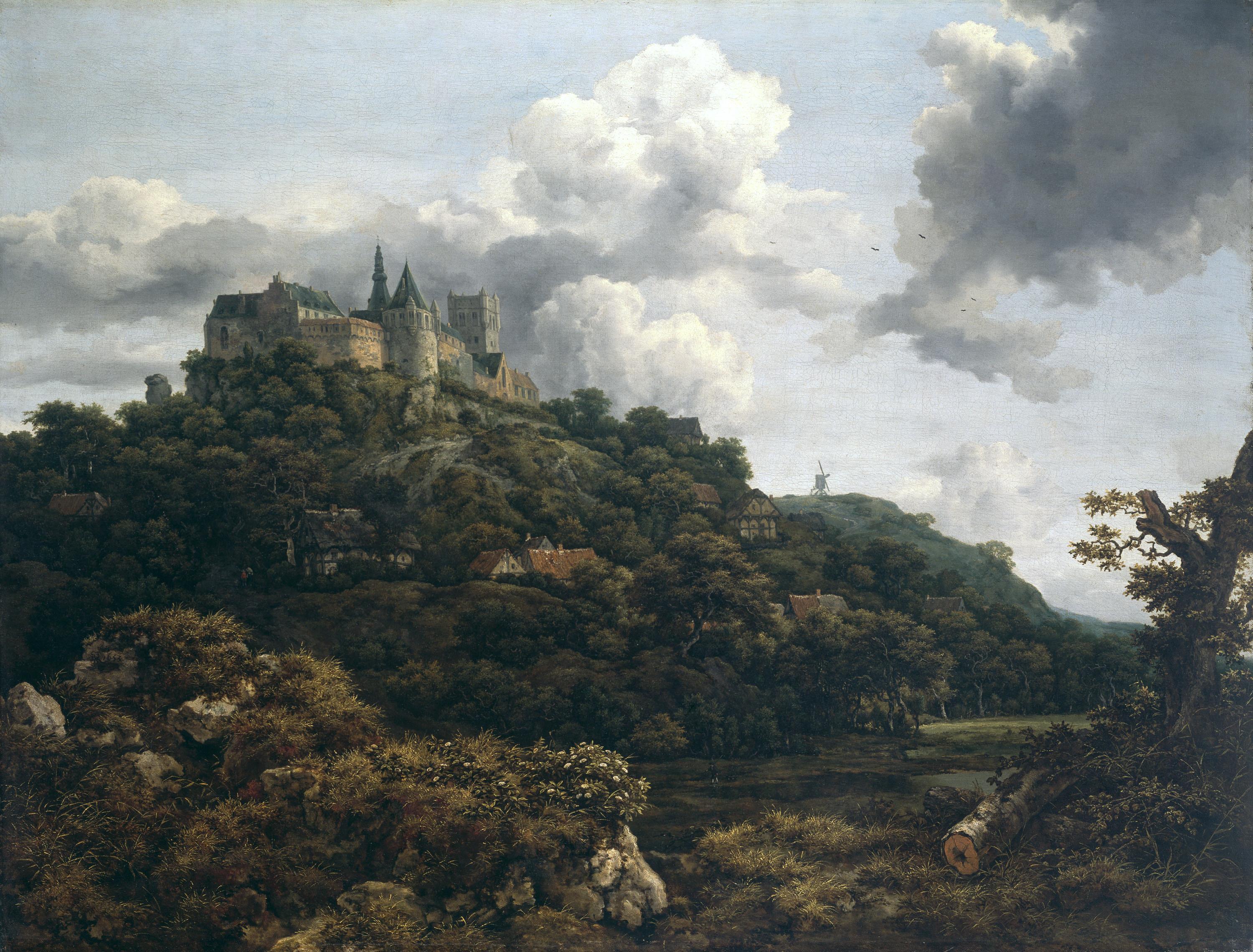
iex -S mix runThe metadata of the main sample file test/images/bentheim.jpg can now be accessed at http://localhost:4000/bentheim.jpg/info.json:

{
    "id": "http://localhost:4000/bentheim.jpg",
    "profile": "level2",
    "type": "ImageServer3",
    "protocol": "http://iiif.io/api/image",
    "rights": "https://creativecommons.org/publicdomain/zero/1.0/",
    "width": 3000,
    "height": 2279,
    "@context": "http://iiif.io/api/image/3/context.json",
    "maxHeight": 10000,
    "maxWidth": 10000,
    "maxArea": 100000000,
    "extra_features": [
        "mirroring",
        "regionByPct",
        "regionByPx",
        "regionSquare",
        "rotationArbitrary",
        "sizeByConfinedWh",
        "sizeByH",
        "sizeByPct",
        "sizeByW",
        "sizeByWh",
        "sizeUpscaling"
    ],
    "preferredFormat": [
        "jpg"
    ],
    "extraFormats": [
        "webp",
        "png",
        "tif"
    ],
    "extraQualities": [
        "color",
        "gray",
        "bitonal"
    ]
}
The sample image can be viewed at http://localhost:4000/bentheim.jpg/full/max/0/default.jpg and you can start experimenting with the IIIF API parameters.

Advanced usage
Input optimization
The performance is greatly improved if you provide your images in more than one resolution. This can be accomplished by providing image pyramids. Using vips8 you can generate a TIF file pyramid:
vips tiffsave input.jpg output_pyramid.tif --compression deflate --tile --tile-width 256 --tile-height 256 --pyramid
The same can be achieved in Elixir with Vix:
{:ok, file} = Image.new_from_file("input.jpg")

Operation.tiffsave(file, "output_pyramid.tif",
    pyramid: true,
    "tile-height": 256,
    "tile-width": 256,
    tile: true,
    compression: :VIPS_FOREIGN_TIFF_COMPRESSION_DEFLATE
)
This will generate a single file that contains multiple pages of decreasing resolution:
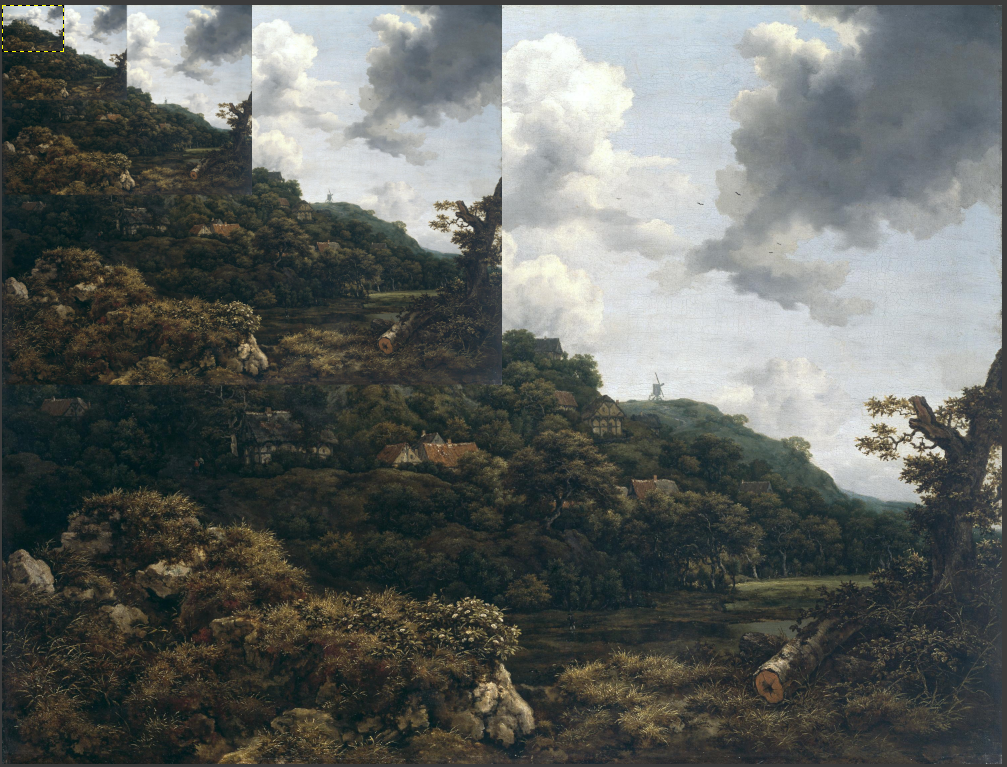
The IIIF Image plug will automatically evaluate these pages and select the best matching for the requested scaling operation - thus avoiding to work on the full scale image where possible.
Output optimization
Some image formats can not be streamed directly and are written to a temporary file by default, see the documentation for the IIIFImagePlug.V3.Options module.
Caching
You can implement your own caching strategy using the optional info_call/1, info_response/2, data_call/1 and data_response/3 callbacks. Have a look at the *_call/1 functions' documentation for two naive examples.
Alternatives to this library
The plug aims to implement the "level 2" compliance for the IIIF image API.
If you only want to provide "level 0" data (the most basic required for tiled viewers), you can preprocess your input images beforehand and serve them as static assets (without any specialized library necessary at runtime).
There exist several resources on how to do this.
Running vips:
vips dzsave input.jpg preprocessed_out --layout iiif3 --depth onetile --overlap 0 --suffix .jpg
This will create a directory "preprocessed_out" that contains a bunch of directories (each corresponding to a possible "region" parameter) and a basic info.json file. These can then be served as static assets.
Again, Vix provides the same functionality in Elixir with Vix.Vips.Operation.dzsave/3.