Architecture
View SourceOverview
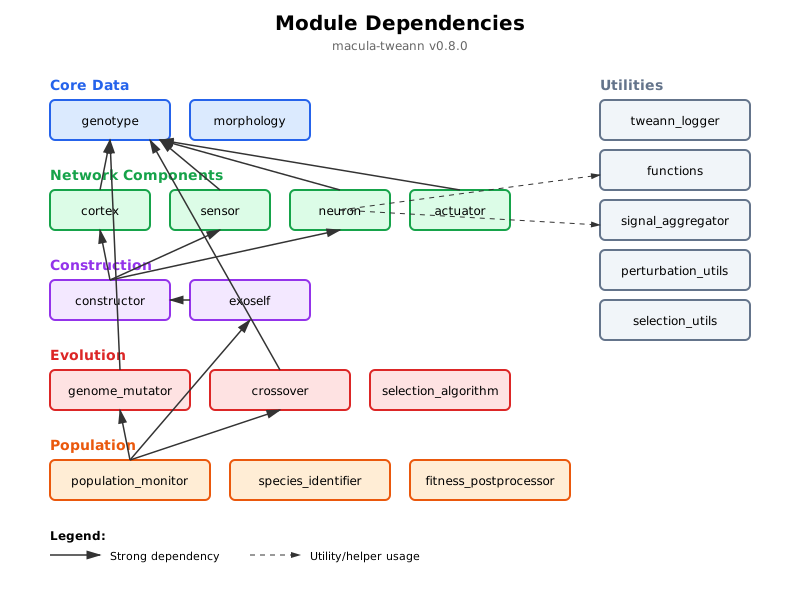
Macula TWEANN uses a layered architecture with clear separation of concerns:
Layers
Core Data Layer
Modules: genotype, morphology
Handles persistent storage of neural network blueprints (genotypes) using Mnesia. Morphologies define problem-specific sensor and actuator configurations.
Network Components Layer
Modules: cortex, sensor, neuron, actuator
Process-based implementation of neural network elements. Each component runs as a separate Erlang process with message-passing communication.
Construction Layer
Modules: constructor, exoself
Constructs running phenotypes (process networks) from stored genotypes. The exoself acts as a coordinator for each agent's evaluation.
Evolution Layer
Modules: genome_mutator, crossover, selection_algorithm
Implements genetic operators for topology and weight evolution. Supports both asexual (mutation) and sexual (crossover) reproduction.
Population Layer
Modules: population_monitor, species_identifier, fitness_postprocessor
Manages multi-agent evolution with speciation for diversity preservation and multi-objective fitness evaluation.
Utilities Layer
Modules: tweann_logger, functions, signal_aggregator, perturbation_utils, selection_utils
Helper functions for logging, activation functions, signal processing, weight perturbation, and selection algorithms.
Process Hierarchy
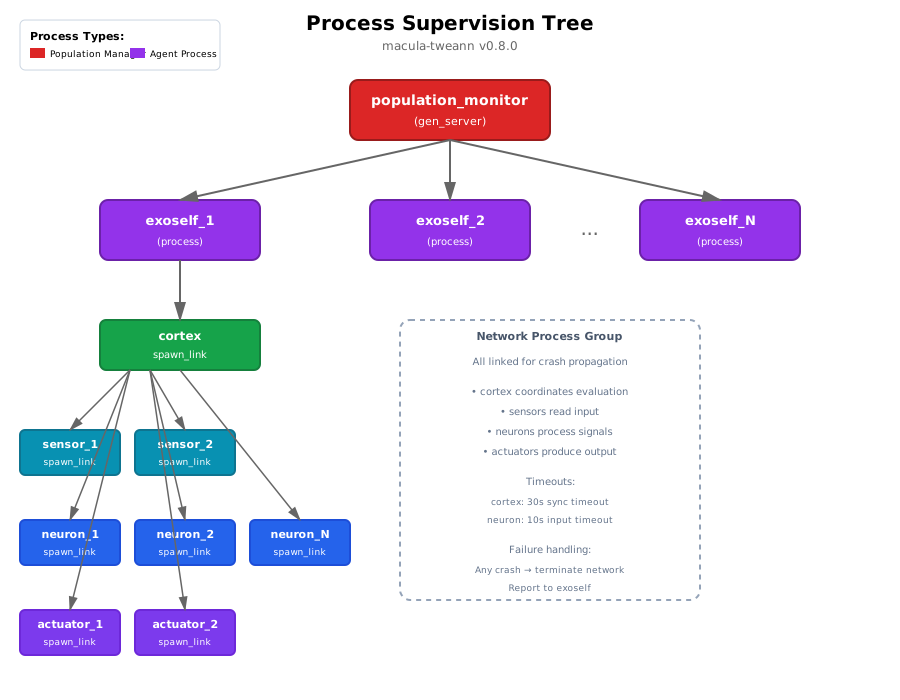
The process tree uses spawn_link for crash propagation:
population_monitor(gen_server) manages multiple agents- Each agent has an
exoselfcoordinating its network - Network processes (cortex, sensors, neurons, actuators) are linked
- Crashes propagate up, terminating the entire network evaluation
Evaluation Flow
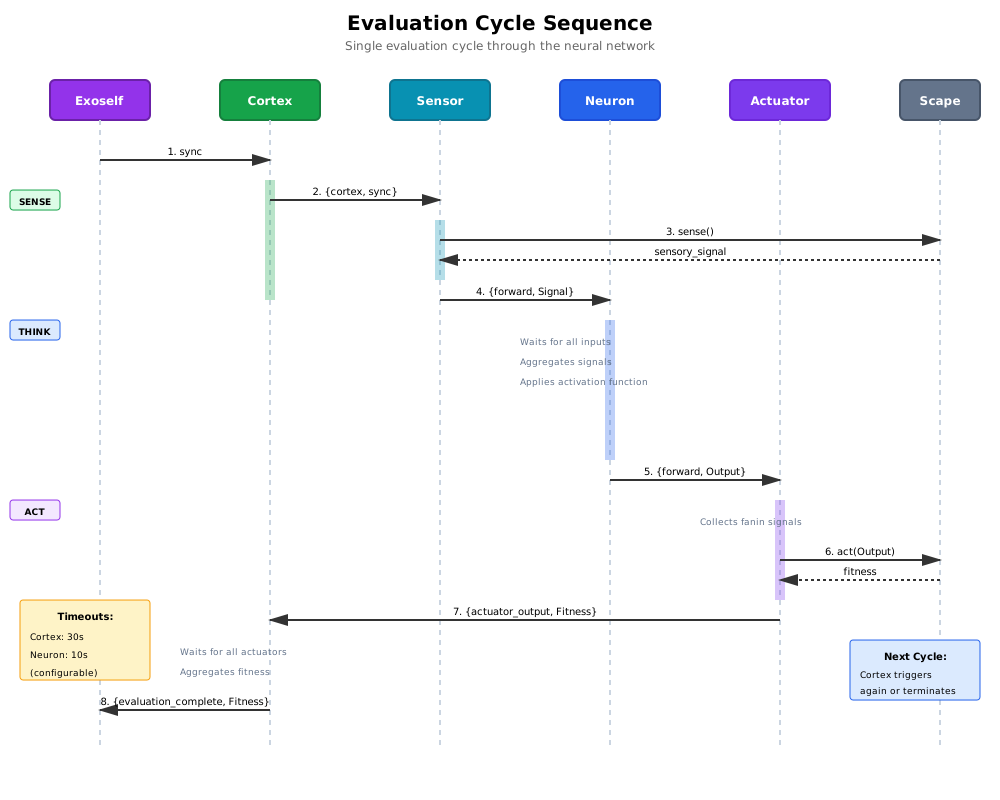
The sense-think-act cycle:
- Sense: Cortex triggers sensors, which read from environment
- Think: Neurons receive signals, aggregate, and activate
- Act: Actuators collect outputs and interact with environment
- Fitness is computed and reported back to exoself
Safety Features
Timeouts
- Cortex: 30s sync timeout (configurable)
- Neuron: 10s input timeout (configurable)
Prevents infinite hangs if network components fail to respond.
Crash Handling
All network processes use spawn_link:
- Component crashes terminate the entire network
- Exoself reports failure to population monitor
- Clean shutdown with proper resource cleanup
Data Flow
Genotype (Mnesia)
    ↓ construct
Phenotype (Processes)
    ↓ evaluate
Fitness
    ↓ selection
Survivors
    ↓ mutation/crossover
New Genotypes
Why This Architecture
Process-Based Benefits
The process-per-neuron design offers unique advantages:
- True Parallelism: On multi-core systems, neurons evaluate concurrently
- Fault Isolation: A crashed neuron doesn't corrupt other components
- Hot Code Loading: Update logic without stopping evolution
- Debuggability: Inspect any component with standard Erlang tools
- Distributed Potential: Network components can span multiple nodes
Comparison to Traditional Implementations
| Feature | Matrix-Based (NumPy/PyTorch) | Process-Based (macula-tweann) |
|---|---|---|
| Speed | Faster for batch | Better for real-time |
| Debugging | Tensor shapes | Individual processes |
| Fault tolerance | Full crash | Graceful degradation |
| Topology changes | Expensive reshape | Natural add/remove |
| Distribution | GPU only | CPU clusters |
When to Choose macula-tweann
Ideal for:
- Embedded systems needing fault tolerance
- Real-time applications (games, robotics)
- Research on topology evolution
- Distributed AI systems
- When debuggability matters
Consider alternatives when:
- Batch training massive datasets (use PyTorch/TensorFlow)
- Maximum throughput on single machine (use matrix libraries)
- GPU acceleration is critical
Next Steps
- See module documentation for detailed API reference
- Check Quick Start for usage examples