NAT Traversal Developer Guide
View SourceThis guide covers the Macula NAT traversal system API, code examples in both Erlang and Elixir, and integration patterns.
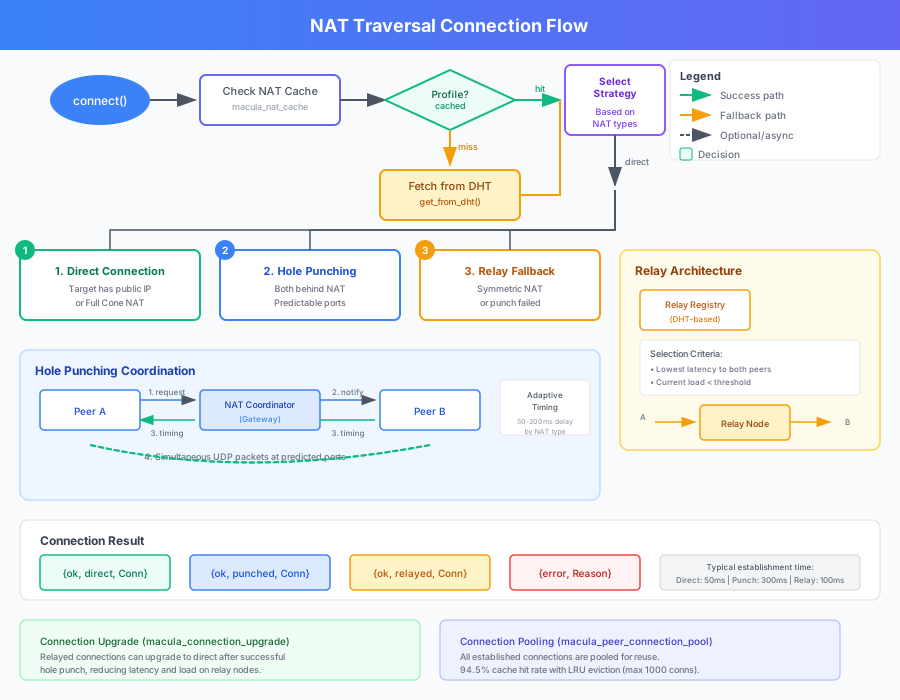
Overview
The NAT traversal system consists of these modules:
| Module | Purpose |
|---|---|
macula_nat_system | Supervisor for NAT subsystem |
macula_nat_detector | Detects local NAT type |
macula_nat_cache | Caches NAT profiles with TTL |
macula_nat_coordinator | Coordinates hole punching |
macula_nat_connector | Intelligent connection establishment |
macula_relay_registry | Distributed relay node registry |
macula_relay_node | Relay server functionality |
Quick Start
Detecting Your NAT Type
Erlang:
%% Detect NAT type (async, returns cached if available)
{ok, Profile} = macula_nat_detector:detect().

%% Force fresh detection (bypasses cache)
{ok, Profile} = macula_nat_detector:detect(#{force => true}).

%% Get cached local profile (fast, no network)
{ok, Profile} = macula_nat_detector:get_local_profile().
Elixir:
# Detect NAT type (async, returns cached if available)
{:ok, profile} = :macula_nat_detector.detect()

# Force fresh detection (bypasses cache)
{:ok, profile} = :macula_nat_detector.detect(%{force: true})

# Get cached local profile (fast, no network)
{:ok, profile} = :macula_nat_detector.get_local_profile()
Connecting to a Peer
Erlang:
%% Connect using optimal strategy (automatic)
{ok, Connection} = macula_nat_connector:connect(TargetNodeId, #{
    timeout => 10000,          % 10 second timeout
    prefer_direct => true      % Try direct before relay
}).

%% The connector automatically:
%% 1. Fetches target's NAT profile from DHT
%% 2. Determines best connection strategy
%% 3. Attempts hole punching if feasible
%% 4. Falls back to relay if needed
Elixir:
# Connect using optimal strategy (automatic)
{:ok, connection} = :macula_nat_connector.connect(target_node_id, %{
  timeout: 10_000,           # 10 second timeout
  prefer_direct: true        # Try direct before relay
})

# The connector automatically:
# 1. Fetches target's NAT profile from DHT
# 2. Determines best connection strategy
# 3. Attempts hole punching if feasible
# 4. Falls back to relay if needed
NAT Detection API
macula_nat_detector
detect/0, detect/1
Detect local NAT characteristics.
Erlang:
-spec detect() -> {ok, nat_profile()} | {error, term()}.
-spec detect(map()) -> {ok, nat_profile()} | {error, term()}.

%% Options:
%%   force => boolean()     - Bypass cache, force fresh detection
%%   timeout => integer()   - Detection timeout in ms (default 5000)
%%   observers => [endpoint()] - Custom observer endpoints

%% Example
{ok, #{
    mapping => ei,           % ei | hd | pd
    filtering => pd,         % ei | hd | pd
    allocation => pp,        % pp | pc | rd
    public_ip => {203,0,113,5},
    public_port => 4433,
    detected_at => 1700000000,
    confidence => high       % high | medium | low
}} = macula_nat_detector:detect().
Elixir:
# Options:
#   force: boolean()     - Bypass cache, force fresh detection
#   timeout: integer()   - Detection timeout in ms (default 5000)
#   observers: [endpoint()] - Custom observer endpoints

# Example
{:ok, %{
  mapping: :ei,           # :ei | :hd | :pd
  filtering: :pd,         # :ei | :hd | :pd
  allocation: :pp,        # :pp | :pc | :rd
  public_ip: {203, 0, 113, 5},
  public_port: 4433,
  detected_at: 1_700_000_000,
  confidence: :high       # :high | :medium | :low
}} = :macula_nat_detector.detect()
get_local_profile/0
Get cached local NAT profile (no network call).
Erlang:
-spec get_local_profile() -> {ok, nat_profile()} | {error, not_detected}.

%% Returns immediately with cached profile
{ok, Profile} = macula_nat_detector:get_local_profile().
Elixir:
# Returns immediately with cached profile
{:ok, profile} = :macula_nat_detector.get_local_profile()
add_observation/2
Add external observation for detection refinement.
Erlang:
-spec add_observation(inet:ip_address(), inet:port_number()) -> ok.

%% Called when receiving reflexive address from external peer
macula_nat_detector:add_observation({198,51,100,1}, 5000).
Elixir:
# Called when receiving reflexive address from external peer
:macula_nat_detector.add_observation({198, 51, 100, 1}, 5000)
refresh/0
Trigger background NAT profile refresh.
Erlang:
-spec refresh() -> ok.

%% Useful after network change (IP change, reconnect)
macula_nat_detector:refresh().
Elixir:
# Useful after network change (IP change, reconnect)
:macula_nat_detector.refresh()
NAT Cache API
macula_nat_cache
Caches NAT profiles with TTL and stale-while-revalidate semantics.
get/1
Get cached NAT profile for a node.
Erlang:
-spec get(binary()) -> {ok, nat_profile()} |
                       {stale, nat_profile()} |
                       {error, not_found}.

%% Fresh cache hit
{ok, Profile} = macula_nat_cache:get(NodeId).

%% Stale but usable (background refresh triggered)
{stale, Profile} = macula_nat_cache:get(NodeId).

%% Not in cache
{error, not_found} = macula_nat_cache:get(UnknownNodeId).
Elixir:
# Fresh cache hit
{:ok, profile} = :macula_nat_cache.get(node_id)

# Stale but usable (background refresh triggered)
{:stale, profile} = :macula_nat_cache.get(node_id)

# Not in cache
{:error, :not_found} = :macula_nat_cache.get(unknown_node_id)
get_from_dht/1
Fetch NAT profile from DHT (with caching).
Erlang:
-spec get_from_dht(binary()) -> {ok, nat_profile()} | {error, term()}.

%% Fetches from DHT if not in local cache
{ok, Profile} = macula_nat_cache:get_from_dht(NodeId).
Elixir:
# Fetches from DHT if not in local cache
{:ok, profile} = :macula_nat_cache.get_from_dht(node_id)
put/2, put/3
Store NAT profile in cache.
Erlang:
-spec put(binary(), nat_profile()) -> ok.
-spec put(binary(), nat_profile(), pos_integer()) -> ok.

%% Store with default TTL (300 seconds)
ok = macula_nat_cache:put(NodeId, Profile).

%% Store with custom TTL
ok = macula_nat_cache:put(NodeId, Profile, 600).  % 10 minutes
Elixir:
# Store with default TTL (300 seconds)
:ok = :macula_nat_cache.put(node_id, profile)

# Store with custom TTL
:ok = :macula_nat_cache.put(node_id, profile, 600)  # 10 minutes
invalidate/1
Remove profile from cache.
Erlang:
-spec invalidate(binary()) -> ok.

%% Force re-fetch on next access
ok = macula_nat_cache:invalidate(NodeId).
Elixir:
# Force re-fetch on next access
:ok = :macula_nat_cache.invalidate(node_id)
stats/0
Get cache statistics.
Erlang:
-spec stats() -> map().

#{
    size => 150,
    hits => 1000,
    misses => 50,
    stale_hits => 25,
    evictions => 10
} = macula_nat_cache:stats().
Elixir:
%{
  size: 150,
  hits: 1000,
  misses: 50,
  stale_hits: 25,
  evictions: 10
} = :macula_nat_cache.stats()
Connection Coordination API
macula_nat_coordinator
Coordinates hole punching between peers.
request_connection/2, request_connection/3
Request connection to a target peer.
Erlang:
-spec request_connection(binary(), map()) ->
    {ok, direct, Connection} |
    {ok, punched, Connection} |
    {ok, relayed, Connection} |
    {error, term()}.

%% Simple request
{ok, Method, Conn} = macula_nat_coordinator:request_connection(
    TargetNodeId,
    #{}
).

%% With options
{ok, Method, Conn} = macula_nat_coordinator:request_connection(
    TargetNodeId,
    #{
        timeout => 15000,
        max_punch_attempts => 3,
        allow_relay => true
    }
).

%% Method indicates how connection was established:
%%   direct  - Direct connection (target has public IP or Full Cone NAT)
%%   punched - Hole punching succeeded
%%   relayed - Using relay node
Elixir:
# Simple request
{:ok, method, conn} = :macula_nat_coordinator.request_connection(
  target_node_id,
  %{}
)

# With options
{:ok, method, conn} = :macula_nat_coordinator.request_connection(
  target_node_id,
  %{
    timeout: 15_000,
    max_punch_attempts: 3,
    allow_relay: true
  }
)

# Method indicates how connection was established:
#   :direct  - Direct connection (target has public IP or Full Cone NAT)
#   :punched - Hole punching succeeded
#   :relayed - Using relay node
coordinate_punch/3
Low-level hole punch coordination (usually internal).
Erlang:
-spec coordinate_punch(binary(), binary(), map()) ->
    {ok, reference()} | {error, term()}.

%% Returns reference for tracking punch attempt
{ok, Ref} = macula_nat_coordinator:coordinate_punch(
    PeerA_NodeId,
    PeerB_NodeId,
    #{predicted_ports => {PeerA_Port, PeerB_Port}}
).
Elixir:
# Returns reference for tracking punch attempt
{:ok, ref} = :macula_nat_coordinator.coordinate_punch(
  peer_a_node_id,
  peer_b_node_id,
  %{predicted_ports: {peer_a_port, peer_b_port}}
)
macula_nat_connector
High-level connection establishment with automatic strategy selection.
connect/2, connect/3
Establish connection to peer using optimal strategy.
Erlang:
-spec connect(binary(), map()) -> {ok, connection()} | {error, term()}.

%% Connect with defaults
{ok, Conn} = macula_nat_connector:connect(TargetNodeId, #{}).

%% Connect with options
{ok, Conn} = macula_nat_connector:connect(TargetNodeId, #{
    timeout => 20000,
    prefer_direct => true,
    fallback_relay => true,
    max_attempts => 3
}).
Elixir:
# Connect with defaults
{:ok, conn} = :macula_nat_connector.connect(target_node_id, %{})

# Connect with options
{:ok, conn} = :macula_nat_connector.connect(target_node_id, %{
  timeout: 20_000,
  prefer_direct: true,
  fallback_relay: true,
  max_attempts: 3
})
Relay System API
macula_relay_registry
Distributed registry of relay-capable nodes.
register/2
Register as relay-capable node.
Erlang:
-spec register(binary(), binary()) -> ok | {error, term()}.

%% Register self as relay with endpoint
ok = macula_relay_registry:register(MyNodeId, MyEndpoint).
Elixir:
# Register self as relay with endpoint
:ok = :macula_relay_registry.register(my_node_id, my_endpoint)
find_relay/1
Find suitable relay for target peer.
Erlang:
-spec find_relay(binary()) -> {ok, relay_info()} | {error, no_relay}.

%% Find relay to reach target
{ok, #{
    node_id => RelayNodeId,
    endpoint => RelayEndpoint,
    latency_ms => 25,
    load => 0.3
}} = macula_relay_registry:find_relay(TargetNodeId).
Elixir:
# Find relay to reach target
{:ok, %{
  node_id: relay_node_id,
  endpoint: relay_endpoint,
  latency_ms: 25,
  load: 0.3
}} = :macula_relay_registry.find_relay(target_node_id)
macula_relay_node
Relay server functionality.
enable/0, enable/1
Enable relay functionality on this node.
Erlang:
-spec enable() -> ok.
-spec enable(map()) -> ok.

%% Enable with defaults
ok = macula_relay_node:enable().

%% Enable with custom limits
ok = macula_relay_node:enable(#{
    max_sessions => 200,
    bandwidth_limit => 2097152,  % 2 MB/s per session
    session_timeout => 1800000   % 30 minutes
}).
Elixir:
# Enable with defaults
:ok = :macula_relay_node.enable()

# Enable with custom limits
:ok = :macula_relay_node.enable(%{
  max_sessions: 200,
  bandwidth_limit: 2_097_152,  # 2 MB/s per session
  session_timeout: 1_800_000   # 30 minutes
})
disable/0
Disable relay functionality.
Erlang:
-spec disable() -> ok.

ok = macula_relay_node:disable().
Elixir:
:ok = :macula_relay_node.disable()request_relay/2
Request relay session to target.
Erlang:
-spec request_relay(binary(), map()) ->
    {ok, relay_session()} | {error, term()}.

{ok, Session} = macula_relay_node:request_relay(TargetNodeId, #{}).
Elixir:
{:ok, session} = :macula_relay_node.request_relay(target_node_id, %{})Integration Examples
Example 1: P2P Chat Application
Erlang:
-module(chat_client).
-export([connect_to_peer/1, send_message/2]).

connect_to_peer(PeerNodeId) ->
    %% NAT-aware connection - automatically handles traversal
    case macula_nat_connector:connect(PeerNodeId, #{timeout => 15000}) of
        {ok, Conn} ->
            log_connection_method(Conn),
            {ok, Conn};
        {error, Reason} ->
            {error, {connection_failed, Reason}}
    end.

log_connection_method(Conn) ->
    Method = macula_connection:get_info(Conn, connection_method),
    io:format("Connected via: ~p~n", [Method]).

send_message(Conn, Message) ->
    macula_connection:send(Conn, {chat_message, Message}).
Elixir:
defmodule ChatClient do
  def connect_to_peer(peer_node_id) do
    # NAT-aware connection - automatically handles traversal
    case :macula_nat_connector.connect(peer_node_id, %{timeout: 15_000}) do
      {:ok, conn} ->
        log_connection_method(conn)
        {:ok, conn}

      {:error, reason} ->
        {:error, {:connection_failed, reason}}
    end
  end

  defp log_connection_method(conn) do
    method = :macula_connection.get_info(conn, :connection_method)
    IO.puts("Connected via: #{inspect(method)}")
  end

  def send_message(conn, message) do
    :macula_connection.send(conn, {:chat_message, message})
  end
end
Example 2: Monitoring NAT Changes
Erlang:
-module(nat_monitor).
-behaviour(gen_server).

init([]) ->
    %% Subscribe to NAT profile changes
    ok = macula_nat_detector:subscribe(self()),
    {ok, #{}}.

handle_info({nat_profile_changed, OldProfile, NewProfile}, State) ->
    io:format("NAT changed: ~p -> ~p~n", [
        maps:get(mapping, OldProfile),
        maps:get(mapping, NewProfile)
    ]),
    %% Notify application of network change
    notify_network_change(NewProfile),
    {noreply, State}.
Elixir:
defmodule NatMonitor do
  use GenServer

  def init(_opts) do
    # Subscribe to NAT profile changes
    :ok = :macula_nat_detector.subscribe(self())
    {:ok, %{}}
  end

  def handle_info({:nat_profile_changed, old_profile, new_profile}, state) do
    IO.puts("""
    NAT changed: #{inspect(old_profile.mapping)} -> #{inspect(new_profile.mapping)}
    """)

    # Notify application of network change
    notify_network_change(new_profile)
    {:noreply, state}
  end

  defp notify_network_change(profile) do
    # Custom notification logic
    Phoenix.PubSub.broadcast(MyApp.PubSub, "nat:changes", {:nat_changed, profile})
  end
end
Example 3: Running a Relay Node
Erlang:
-module(relay_server).
-export([start/0, stop/0]).

start() ->
    %% Enable relay with monitoring
    ok = macula_relay_node:enable(#{
        max_sessions => 500,
        bandwidth_limit => 5242880,  % 5 MB/s
        on_session_start => fun log_session_start/1,
        on_session_end => fun log_session_end/1
    }),

    %% Register in distributed registry
    {ok, NodeId} = macula:get_node_id(),
    {ok, Endpoint} = macula:get_public_endpoint(),
    ok = macula_relay_registry:register(NodeId, Endpoint),

    io:format("Relay server started~n").

stop() ->
    ok = macula_relay_node:disable(),
    io:format("Relay server stopped~n").

log_session_start(#{peer_a := A, peer_b := B}) ->
    io:format("Relay session: ~s <-> ~s~n", [A, B]).

log_session_end(#{peer_a := A, peer_b := B, bytes_transferred := Bytes}) ->
    io:format("Session ended: ~s <-> ~s (~p bytes)~n", [A, B, Bytes]).
Elixir:
defmodule RelayServer do
  require Logger

  def start do
    # Enable relay with monitoring
    :ok = :macula_relay_node.enable(%{
      max_sessions: 500,
      bandwidth_limit: 5_242_880,  # 5 MB/s
      on_session_start: &log_session_start/1,
      on_session_end: &log_session_end/1
    })

    # Register in distributed registry
    {:ok, node_id} = :macula.get_node_id()
    {:ok, endpoint} = :macula.get_public_endpoint()
    :ok = :macula_relay_registry.register(node_id, endpoint)

    Logger.info("Relay server started")
  end

  def stop do
    :ok = :macula_relay_node.disable()
    Logger.info("Relay server stopped")
  end

  defp log_session_start(%{peer_a: a, peer_b: b}) do
    Logger.info("Relay session: #{a} <-> #{b}")
  end

  defp log_session_end(%{peer_a: a, peer_b: b, bytes_transferred: bytes}) do
    Logger.info("Session ended: #{a} <-> #{b} (#{bytes} bytes)")
  end
end
Example 4: Phoenix LiveView Integration
Elixir:
defmodule MyAppWeb.ConnectionLive do
  use MyAppWeb, :live_view

  def mount(_params, _session, socket) do
    if connected?(socket) do
      # Subscribe to NAT changes
      :macula_nat_detector.subscribe(self())

      # Get initial NAT profile
      {:ok, profile} = :macula_nat_detector.get_local_profile()

      {:ok,
       socket
       |> assign(:nat_profile, profile)
       |> assign(:connection_status, :disconnected)
       |> assign(:peers, [])}
    else
      {:ok,
       socket
       |> assign(:nat_profile, nil)
       |> assign(:connection_status, :loading)
       |> assign(:peers, [])}
    end
  end

  def handle_event("connect", %{"peer_id" => peer_id}, socket) do
    socket = assign(socket, :connection_status, :connecting)

    Task.async(fn ->
      :macula_nat_connector.connect(peer_id, %{timeout: 15_000})
    end)

    {:noreply, socket}
  end

  def handle_info({ref, {:ok, conn, method}}, socket) when is_reference(ref) do
    Process.demonitor(ref, [:flush])

    {:noreply,
     socket
     |> assign(:connection_status, {:connected, method})
     |> update(:peers, fn peers -> [conn | peers] end)}
  end

  def handle_info({ref, {:error, reason}}, socket) when is_reference(ref) do
    Process.demonitor(ref, [:flush])

    {:noreply,
     socket
     |> assign(:connection_status, {:error, reason})}
  end

  def handle_info({:nat_profile_changed, _old, new_profile}, socket) do
    {:noreply, assign(socket, :nat_profile, new_profile)}
  end

  def render(assigns) do
    ~H"""
    <div class="nat-status">
      <h3>NAT Status</h3>
      <%= if @nat_profile do %>
        <dl>
          <dt>Mapping</dt>
          <dd><%= @nat_profile.mapping %></dd>
          <dt>Filtering</dt>
          <dd><%= @nat_profile.filtering %></dd>
          <dt>Allocation</dt>
          <dd><%= @nat_profile.allocation %></dd>
          <dt>Public IP</dt>
          <dd><%= format_ip(@nat_profile.public_ip) %></dd>
        </dl>
      <% else %>
        <p>Detecting NAT type...</p>
      <% end %>

      <h3>Connection Status: <%= inspect(@connection_status) %></h3>

      <form phx-submit="connect">
        <input type="text" name="peer_id" placeholder="Peer Node ID" />
        <button type="submit">Connect</button>
      </form>
    </div>
    """
  end

  defp format_ip({a, b, c, d}), do: "#{a}.#{b}.#{c}.#{d}"
end
Example 5: GenServer-based Connection Manager
Elixir:
defmodule MyApp.ConnectionManager do
  use GenServer
  require Logger

  defstruct [:node_id, :connections, :nat_profile]

  # Client API

  def start_link(opts) do
    GenServer.start_link(__MODULE__, opts, name: __MODULE__)
  end

  def connect(peer_id), do: GenServer.call(__MODULE__, {:connect, peer_id})
  def disconnect(peer_id), do: GenServer.cast(__MODULE__, {:disconnect, peer_id})
  def list_connections, do: GenServer.call(__MODULE__, :list)
  def get_nat_profile, do: GenServer.call(__MODULE__, :nat_profile)

  # Server Callbacks

  @impl true
  def init(opts) do
    node_id = Keyword.fetch!(opts, :node_id)

    # Detect NAT type on startup
    {:ok, profile} = :macula_nat_detector.detect()

    # Subscribe to profile changes
    :macula_nat_detector.subscribe(self())

    state = %__MODULE__{
      node_id: node_id,
      connections: %{},
      nat_profile: profile
    }

    Logger.info("ConnectionManager started with NAT profile: #{inspect(profile)}")
    {:ok, state}
  end

  @impl true
  def handle_call({:connect, peer_id}, _from, state) do
    case :macula_nat_connector.connect(state.node_id, peer_id, %{timeout: 10_000}) do
      {:ok, conn, method} ->
        Logger.info("Connected to #{peer_id} via #{method}")
        connections = Map.put(state.connections, peer_id, {conn, method})
        {:reply, {:ok, method}, %{state | connections: connections}}

      {:error, reason} = error ->
        Logger.warning("Failed to connect to #{peer_id}: #{inspect(reason)}")
        {:reply, error, state}
    end
  end

  def handle_call(:list, _from, state) do
    {:reply, Map.keys(state.connections), state}
  end

  def handle_call(:nat_profile, _from, state) do
    {:reply, state.nat_profile, state}
  end

  @impl true
  def handle_cast({:disconnect, peer_id}, state) do
    case Map.pop(state.connections, peer_id) do
      {{conn, _method}, connections} ->
        :macula_nat_connector.disconnect(conn)
        {:noreply, %{state | connections: connections}}

      {nil, _} ->
        {:noreply, state}
    end
  end

  @impl true
  def handle_info({:nat_profile_changed, old, new}, state) do
    Logger.info("NAT profile changed: #{inspect(old.mapping)} -> #{inspect(new.mapping)}")

    # Optionally reconnect peers if NAT type changed significantly
    if needs_reconnection?(old, new) do
      reconnect_all_peers(state)
    end

    {:noreply, %{state | nat_profile: new}}
  end

  defp needs_reconnection?(old, new) do
    old.mapping != new.mapping or old.filtering != new.filtering
  end

  defp reconnect_all_peers(state) do
    for {peer_id, {conn, _}} <- state.connections do
      :macula_nat_connector.disconnect(conn)
      send(self(), {:reconnect, peer_id})
    end
  end
end
Error Handling
Common Errors
| Error | Cause | Solution |
|---|---|---|
{:error, :detection_timeout} | NAT detection timed out | Check network, retry with longer timeout |
{:error, :no_observers} | No public peers for detection | Connect to gateway first |
{:error, :symmetric_nat} | Both peers have symmetric NAT | Relay will be used automatically |
{:error, :punch_failed} | Hole punching failed | Falls back to relay automatically |
{:error, :no_relay} | No relay available | Enable relay on more nodes |
Handling Connection Failures
Erlang:
connect_with_fallback(TargetNodeId) ->
    case macula_nat_connector:connect(TargetNodeId, #{
        timeout => 10000,
        fallback_relay => true
    }) of
        {ok, Conn} ->
            {ok, Conn};
        {error, no_relay} ->
            %% No relay available, try direct with longer timeout
            macula_nat_connector:connect(TargetNodeId, #{
                timeout => 30000,
                fallback_relay => false,
                max_attempts => 5
            });
        {error, Reason} ->
            {error, Reason}
    end.
Elixir:
def connect_with_fallback(target_node_id) do
  case :macula_nat_connector.connect(target_node_id, %{
    timeout: 10_000,
    fallback_relay: true
  }) do
    {:ok, conn} ->
      {:ok, conn}

    {:error, :no_relay} ->
      # No relay available, try direct with longer timeout
      :macula_nat_connector.connect(target_node_id, %{
        timeout: 30_000,
        fallback_relay: false,
        max_attempts: 5
      })

    {:error, reason} ->
      {:error, reason}
  end
end
Performance Considerations
NAT Detection Timing
| Operation | Typical Latency |
|---|---|
| Cached profile lookup | < 1ms |
| Fresh detection (2 observers) | 200-400ms |
| DHT profile fetch | 100-300ms |
| Hole punch coordination | 200-500ms |
Caching Strategy
Erlang:
%% Pre-warm cache for known peers at startup
prewarm_nat_cache(KnownPeers) ->
    lists:foreach(
        fun(PeerId) ->
            spawn(fun() -> macula_nat_cache:get_from_dht(PeerId) end)
        end,
        KnownPeers
    ).
Elixir:
# Pre-warm cache for known peers at startup
def prewarm_nat_cache(known_peers) do
  known_peers
  |> Task.async_stream(fn peer_id ->
    :macula_nat_cache.get_from_dht(peer_id)
  end, max_concurrency: 10)
  |> Stream.run()
end
Debugging
Logging NAT Events
Erlang:
%% Enable debug logging for NAT system
logger:set_module_level(macula_nat_detector, debug),
logger:set_module_level(macula_nat_coordinator, debug),
logger:set_module_level(macula_nat_connector, debug).
Elixir:
# Enable debug logging for NAT system
Logger.configure(level: :debug)

# Or configure specific modules in config/dev.exs
config :logger, :console,
  metadata: [:module],
  format: "$time $metadata[$level] $message\n"
Inspecting NAT State
Erlang:
%% Get current NAT profile
{ok, Profile} = macula_nat_detector:get_local_profile(),
io:format("NAT Profile: ~p~n", [Profile]).

%% Check cache stats
Stats = macula_nat_cache:stats(),
io:format("Cache Stats: ~p~n", [Stats]).

%% List pending punch attempts
Pending = macula_nat_coordinator:get_pending(),
io:format("Pending Punches: ~p~n", [Pending]).
Elixir:
# Get current NAT profile
{:ok, profile} = :macula_nat_detector.get_local_profile()
IO.inspect(profile, label: "NAT Profile")

# Check cache stats
stats = :macula_nat_cache.stats()
IO.inspect(stats, label: "Cache Stats")

# List pending punch attempts
pending = :macula_nat_coordinator.get_pending()
IO.inspect(pending, label: "Pending Punches")
See Also
- NAT Types Explained - Background on NAT types