Macula
View Source



BEAM-native HTTP/3 mesh networking for decentralized applications
What is Macula?
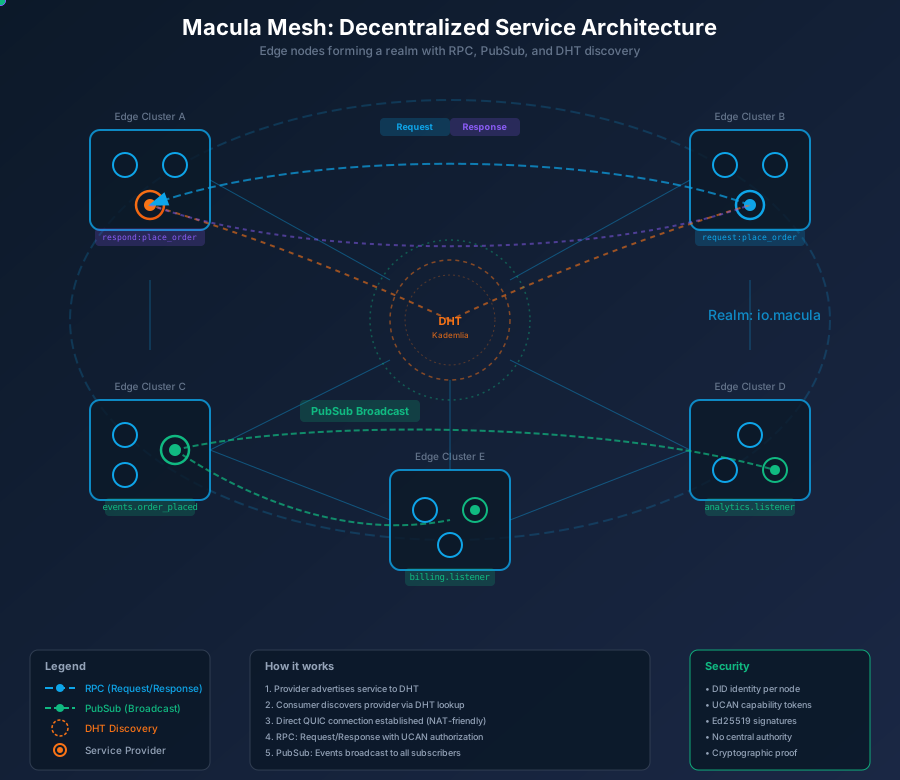
Macula is an Erlang/OTP library that provides a complete distributed mesh networking stack over HTTP/3 (QUIC). It enables BEAM applications to form self-organizing networks with:
- Zero configuration clustering via UDP multicast gossip
- NAT-friendly transport using QUIC (single UDP port)
- Decentralized service discovery via Kademlia DHT
- Capability-based security with DID identities and UCAN tokens
Features
Mesh Networking
| Feature | Description |
|---|---|
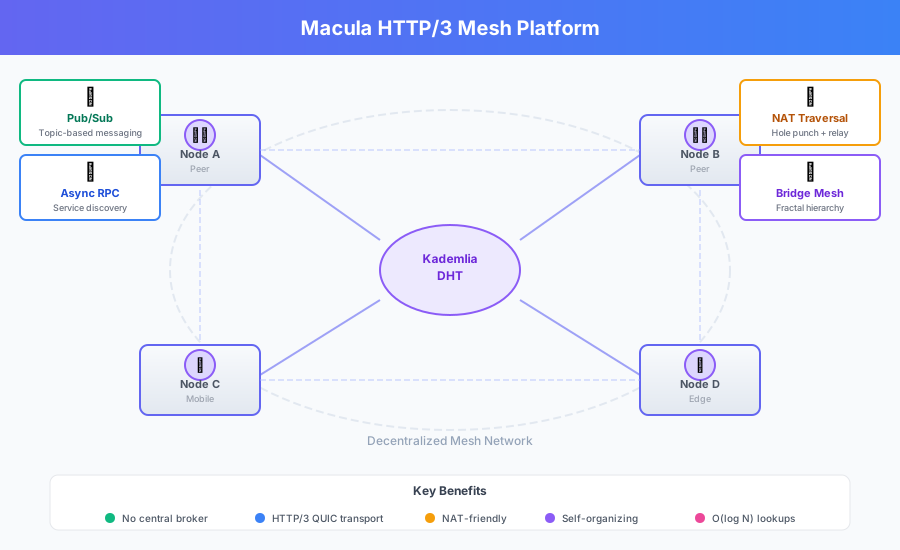
| HTTP/3 over QUIC | NAT-friendly, firewall-friendly, built-in TLS 1.3 |
| Kademlia DHT | Decentralized routing with O(log N) lookups |
| Multi-tenant realms | Isolated namespaces for different applications |
| Connection pooling | 94.5% hit rate, LRU eviction |
Pub/Sub Messaging
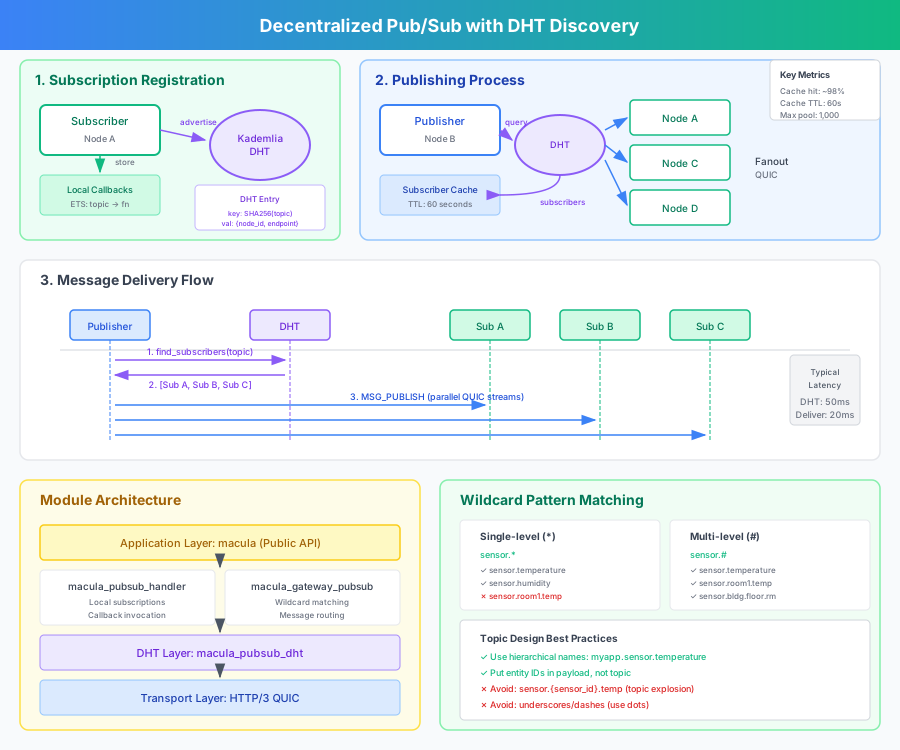
%% Subscribe to a topic
ok = macula:subscribe(Peer, <<"sensors.temperature">>, fun(Msg) ->
    io:format("Received: ~p~n", [Msg])
end).

%% Publish to subscribers
ok = macula:publish(Peer, <<"sensors.temperature">>, #{value => 23.5}).
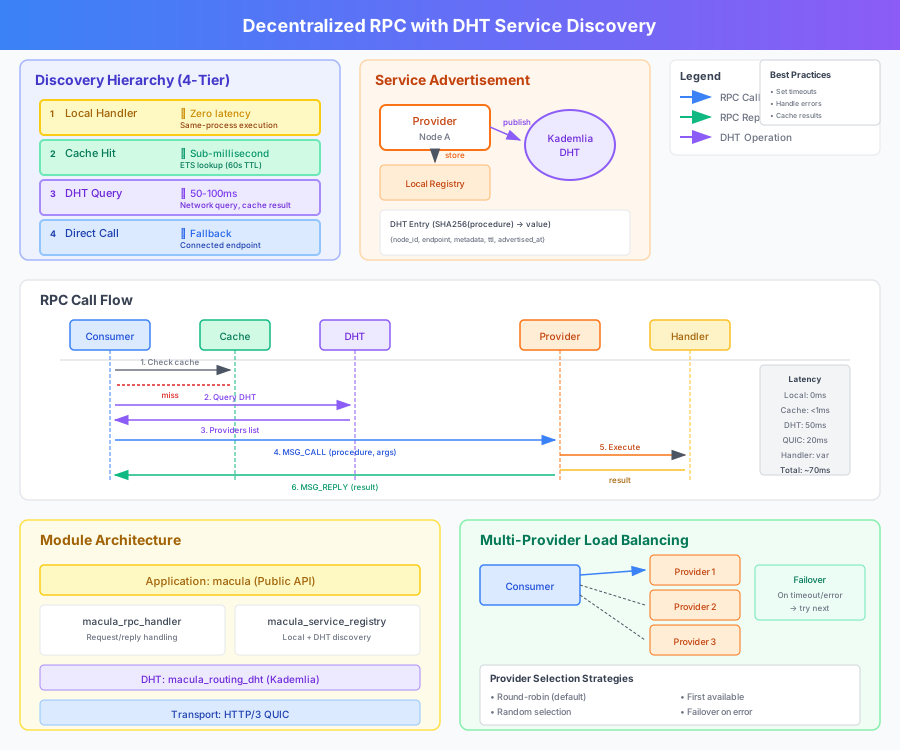
RPC (Request/Response)
%% Register a procedure handler
ok = macula:register(Peer, <<"math.add">>, fun(#{a := A, b := B}) ->
    {ok, #{result => A + B}}
end).

%% Call the procedure (discovers provider via DHT)
{ok, #{result := 5}} = macula:call(Peer, <<"math.add">>, #{a => 2, b => 3}).
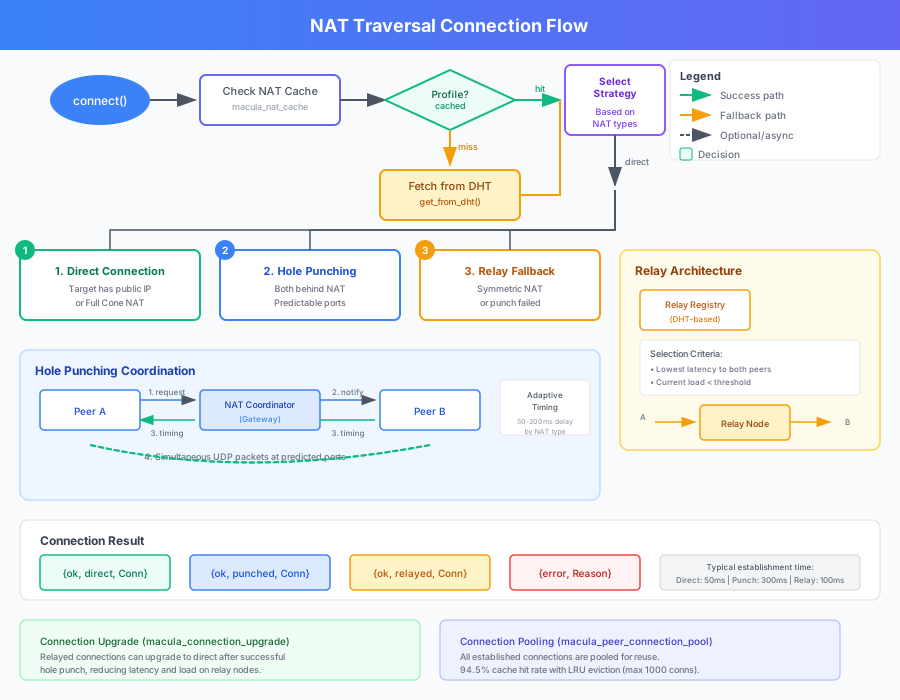
NAT Traversal
| Technique | Status | Description |
|---|---|---|
| Hole Punching | Adaptive | Direct P2P through NAT |
| STUN-like Probing | Built-in | Reflexive address detection |
| Relay Fallback | Automatic | When direct fails |
| Connection Upgrade | Transparent | Relay → Direct when possible |
Gossip Clustering
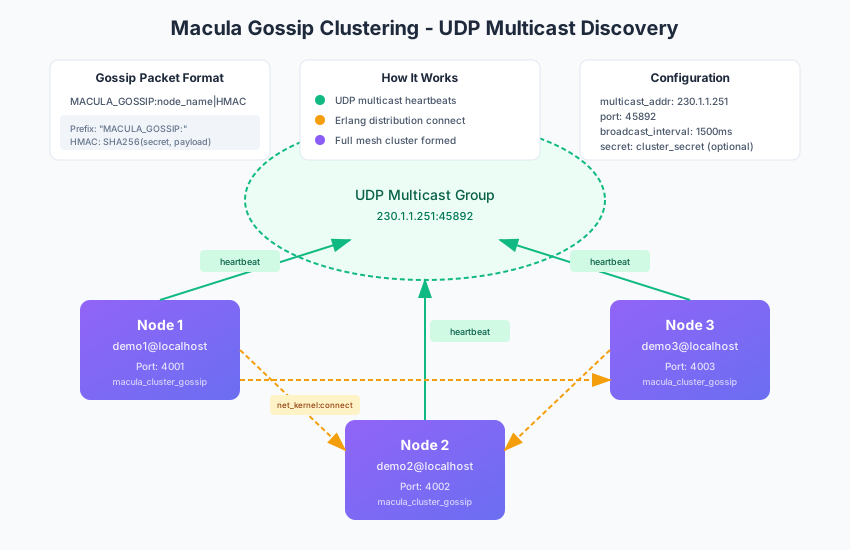
Zero-configuration cluster formation using UDP multicast:
%% Start gossip-based clustering
ok = macula_cluster:start_cluster(#{
    strategy => gossip,
    secret => <<"my_cluster_secret">>  %% Optional HMAC authentication
}).

%% Nodes auto-discover via multicast 230.1.1.251:45892
Content Transfer (P2P Artifacts)
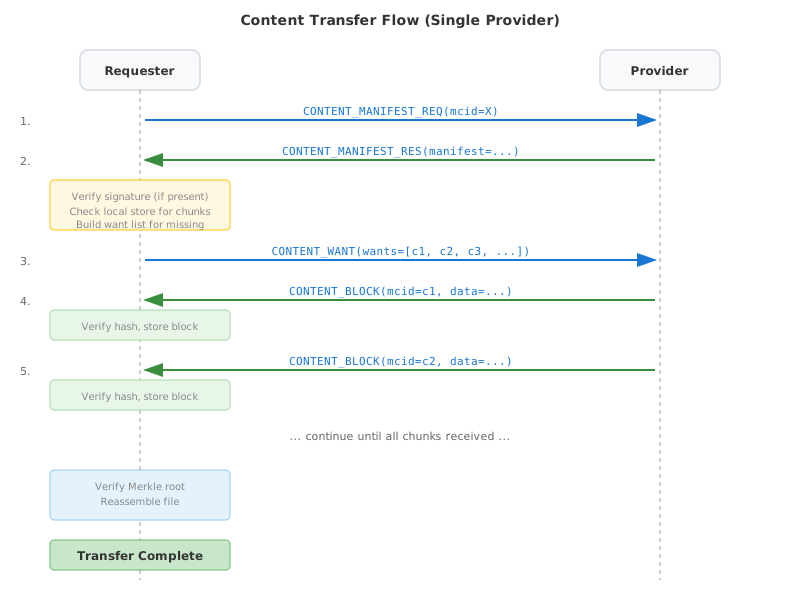
Content-addressed storage and transfer for distributing OTP releases across the mesh:
%% Publish a file to the mesh
{ok, MCID} = macula_content:publish("/path/to/release.tar.gz").

%% Fetch from any provider
{ok, Binary} = macula_content:fetch(MCID).| Feature | Description |
|---|---|
| MCID | Content-addressed identifiers (BLAKE3/SHA256) |
| Merkle verification | Chunk-level integrity |
| Parallel download | From multiple providers |
| Want/Have/Block | Efficient P2P protocol |
Authorization (DID + UCAN)
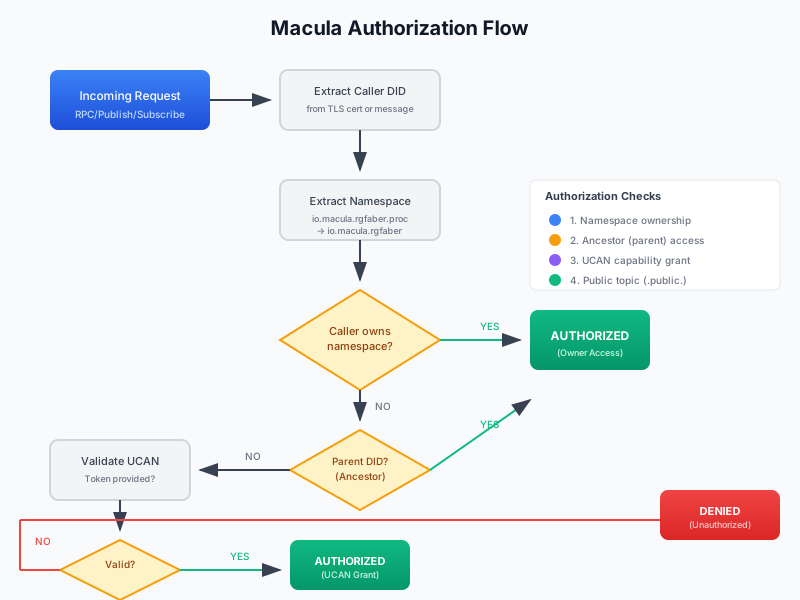
Decentralized capability-based authorization:
| Component | Purpose |
|---|---|
| DID | Decentralized identifiers for namespace ownership |
| UCAN | Capability tokens for delegated permissions |
| Namespace | did:macula:io.example.user owns io.example.user.* |
Hierarchical DHT (Bridge System)
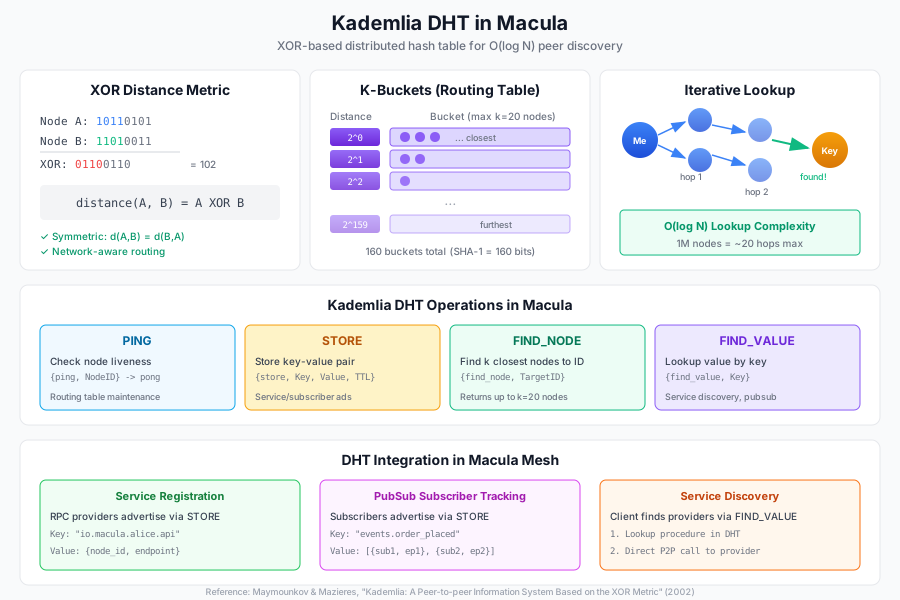
Fractal mesh hierarchy with query escalation:
Cluster → Street → Neighborhood → City → Province → Country → Region → GlobalWhen a DHT query fails locally, it escalates to parent levels with results cached at lower levels.
Quick Start
Installation
Add to your rebar.config:
{deps, [
    {macula, "0.19.2"}
]}.
Or in Elixir mix.exs:
defp deps do
  [
    {:macula, "~> 0.19.2"}
  ]
end
Basic Usage
%% Start macula application
application:ensure_all_started(macula).

%% Connect to the mesh
{ok, Peer} = macula:connect(<<"quic://seed.example.com:9443">>, #{
    realm => <<"io.example.myapp">>,
    node_id => <<"node-001">>
}).

%% Subscribe to events
macula:subscribe(Peer, <<"events.orders">>, fun(Order) ->
    process_order(Order)
end).

%% Make RPC calls
{ok, Result} = macula:call(Peer, <<"inventory.check">>, #{sku => <<"ABC123">>}).
Configuration
Environment Variables
| Variable | Default | Description |
|---|---|---|
MACULA_QUIC_PORT | 9443 | QUIC listener port |
MACULA_REALM | com.example.realm | Default realm |
HEALTH_PORT | 8080 | Health check HTTP port |
MACULA_TLS_MODE | development | TLS mode (production/development) |
CLUSTER_STRATEGY | gossip | Cluster strategy (gossip/static/mdns) |
CLUSTER_SECRET | - | Shared secret for gossip HMAC |
Application Config
{macula, [
    {quic_port, 9443},
    {realm, <<"io.example.myapp">>},
    {tls_mode, production},
    {tls_cacertfile, "/etc/ssl/certs/ca-certificates.crt"}
]}.
Documentation
| Guide | Description |
|---|---|
| Cluster API Guide | Clustering and distribution |
| Gossip Clustering Guide | UDP multicast discovery |
| Content Transfer Guide | P2P artifact distribution |
| NAT Traversal Guide | NAT techniques |
| DHT Guide | Kademlia DHT internals |
| Authorization Guide | DID/UCAN security |
| TLS Configuration | Production TLS setup |
Version History
| Version | Date | Highlights |
|---|---|---|
| v0.19.2 | Jan 2026 | README rework with feature sections and SVGs |
| v0.19.1 | Jan 2026 | Gossip clustering, static strategy (34 tests) |
| v0.19.0 | Jan 2026 | Content transfer system, MCID, Want/Have/Block (171 tests) |
| v0.18.0 | Jan 2026 | Cluster API for bc_gitops integration (19 tests) |
| v0.16.0 | Dec 2025 | Registry system, Ed25519 signing (60 tests) |
| v0.15.0 | Dec 2025 | Gossip protocol, CRDT replication (29 tests) |
| v0.14.0 | Dec 2025 | Masterless CRDT architecture (48 tests) |
| v0.13.0 | Dec 2025 | Hierarchical DHT, bridge system (40 tests) |
| v0.12.0 | Nov 2025 | Complete NAT traversal (70 tests) |
See CHANGELOG.md for full history.
Architecture
Macula follows an always-on architecture where every node has all capabilities:
macula_root (application supervisor)
├── macula_routing_server (Kademlia DHT)
├── macula_nat_system (NAT traversal)
├── macula_bootstrap_system (mesh discovery)
├── macula_gateway_system (QUIC transport)
├── macula_bridge_system (hierarchical mesh)
├── macula_platform_system (CRDT coordination)
├── macula_registry_system (package distribution)
├── macula_content_system (P2P content transfer)
└── macula_dist_system (Erlang distribution)
Related Projects
| Project | Description |
|---|---|
| macula-ecosystem | Documentation hub |
| macula-console | Management console |
| bc-gitops | GitOps reconciler |
| macula-tweann | Neuroevolution framework |
Community
- Hex.pm: hex.pm/packages/macula
- GitHub: github.com/macula-io/macula
- Issues: github.com/macula-io/macula/issues
License
Apache 2.0 - See LICENSE for details.
Built with the BEAM